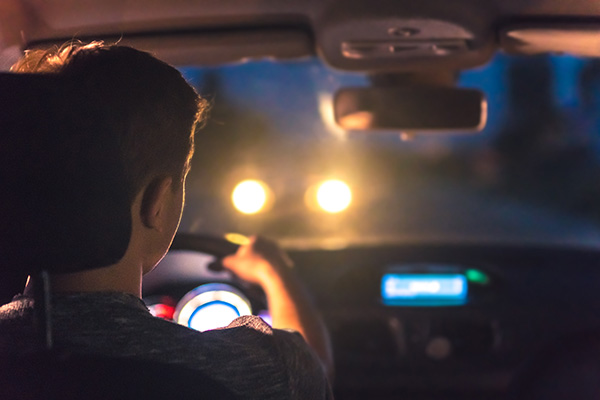
Night driving is more demanding than daytime driving because the driver receives less visual information and has less time to process what appears ahead. Headlights illuminate only part of the road, colors and contrast become harder to distinguish, and hazards can remain hidden until the vehicle is close to them.
Many drivers respond by following the same speed and spacing habits they use during the day. That leaves less room for braking, steering, and decision-making. These ten conditions explain why even familiar roads require more attention after dark.
Limited Visibility Changes How Far Ahead You Can See
1. Headlights do not illuminate the full stopping distance.
Low-beam headlights usually reveal a limited section of road ahead. At higher speeds, a vehicle may travel beyond that illuminated area before the driver can identify a hazard, react, and stop. This is sometimes called overdriving the headlights.
Reducing speed extends the time available to respond to stalled vehicles, debris, pedestrians, animals, and changes in the road. High beams can improve distance on dark roads, but they should be lowered when approaching or following another vehicle.
2. Peripheral details become harder to detect.
At night, drivers tend to focus on the brightest area directly ahead. Movement near the edge of the road can be missed, particularly when a pedestrian, cyclist, animal, or unlit vehicle blends into the background.
Scan beyond the center of the headlight beams. Check shoulders, intersections, driveways, and parked vehicles without staring in one place for too long.
Glare And Eye Adaptation Reduce Clarity
3. Oncoming headlights can temporarily reduce vision.
Bright headlights cause the pupils to contract. After the vehicle passes, the eyes need time to adjust to darkness again. During that period, lane markings, curves, and dark objects may be harder to see.
Look toward the right edge of your lane rather than directly at approaching lights. Keep enough distance from the vehicle ahead so you are not relying entirely on its taillights to guide your path.
4. Dirty glass scatters light.
A windshield can appear clear during the day while still carrying a thin film of dust, smoke residue, cleaning product, or oily contamination. At night, that film scatters light from headlights and street lamps, creating haze and glare.
Clean both the inside and outside of the windshield. Worn wiper blades, washer fluid that leaves residue, and scratched glass can also reduce clarity. Damaged or cloudy headlight lenses should be restored or replaced because reduced light output shortens the visible road ahead.
Fatigue And Slower Reactions Add Risk
5. The body naturally becomes less alert at night.
Drivers may feel awake when leaving, then lose concentration as the trip continues. Reduced alertness affects lane control, speed consistency, hazard recognition, and reaction time.
Repeated yawning, heavy eyelids, missed signs, drifting within the lane, or difficulty remembering the last several miles are warnings to stop. Coffee, loud music, and open windows do not replace sleep.
6. Night trips often happen after a full day.
A driver may begin an evening trip after working, studying, caring for children, or completing other tiring activities. Even when the route is familiar, mental and physical fatigue reduce the ability to respond to sudden changes.
Plan breaks before concentration begins falling. When another rested driver is available, switch drivers early rather than waiting until one person is struggling to stay awake.
Animals And Pedestrians Can Appear Suddenly
7. Wildlife is more active around dusk and dawn.
Deer and other animals may enter the road with little warning, particularly near wooded areas, fields, waterways, and animal-crossing signs. A driver may see eye reflection before seeing the full animal.
Slow down in high-risk areas and scan both sides of the road. When one animal crosses, expect others nearby. Do not make an uncontrolled swerve that could send the vehicle into oncoming traffic, a ditch, or a roadside object.
8. Pedestrians and cyclists may be difficult to see.
Dark clothing, limited street lighting, and poor weather can make a person nearly invisible until the vehicle is close. Pedestrians may also misjudge how visible they are to drivers.
Use extra care near crosswalks, neighborhoods, transit stops, parking lots, and entertainment districts. Check carefully before turning because headlight beams may point away from the area where a pedestrian is crossing.
Road And Weather Hazards Are Harder To Read
9. Depth and speed are more difficult to judge.
Darkness removes many of the visual reference points drivers use to estimate distance. Curves may appear less sharp than they are, and an approaching vehicle may be closer or moving faster than expected.
Increase following distance and avoid rushed passing decisions. Watch reflective signs, lane markings, and the movement of vehicles ahead for information about upcoming curves and elevation changes.
10. Rain, fog, and wet pavement multiply glare.
Rain reflects headlight beams from the road, while fog sends light back toward the driver. Lane markings may disappear beneath water, and standing water can remain hidden until the tires reach it.
Use low beams in fog because high beams reflect more light toward the vehicle. Reduce speed, increase following distance, and avoid cruise control when traction is uncertain. Wet roads also require more braking distance, even when the tires still have legal tread depth.
Prepare The Vehicle For Better Night Visibility
Headlights should be clear, correctly aimed, and equal in brightness. A failed bulb is obvious, but poor aim, voltage loss, cloudy lenses, and damaged housings can reduce visibility without leaving the road completely dark.
A night-driving inspection should also include:
- Brake lights and turn signals
- Windshield wipers
- Washer fluid
- Tire pressure and tread
- Mirror condition
- Defroster operation
- Battery and charging performance
- Dashboard lighting controls
Dashboard brightness should be high enough to read controls without creating glare inside the cabin. Regular maintenance also helps keep tires, brakes, steering, and suspension ready for sudden stops or directional changes when a hazard appears late.
Get Night Driving Safety Service In Williamsburg, IA, With Just Automotive
Just Automotive in Williamsburg, IA, can check your headlights, exterior lighting, windshield wipers, tires, brakes, battery, steering, and suspension before nighttime travel.
Contact us to schedule service when visibility is poor, lights appear dim, or your vehicle feels less controlled after dark.