A car A/C system can feel fine one week and weak the next. The vents still blow air, the fan still works, and the buttons still respond, but the air coming out isn't as cold as it should be. Many drivers assume the system just needs more Freon.
That might be partly true, but it leaves out the real question. If the refrigerant is low, where did it go? A sealed A/C system should not continue to lose refrigerant unless there is a leak.
Freon Is Really Refrigerant
Many people still use the term Freon when talking about car A/C, even though modern vehicles use different refrigerants. The job is the same. Refrigerant moves through the A/C system, absorbs heat from the cabin, and releases that heat outside the vehicle.
When the refrigerant level drops, the system cannot move heat properly. The air from the vents may feel warm, slightly cool, or cold, depending on the speed. Low refrigerant can also make the compressor work harder, potentially turning a leak into a more expensive A/C repair if left unchecked.
Why A/C Systems Start Leaking
Your car’s A/C system operates under pressure and operates in a harsh environment. Heat, vibration, road debris, moisture, age, and worn seals all take a toll. Over time, rubber parts can dry out, metal parts can corrode, and small connections can stop sealing as tightly as they once did.
A leak can be tiny at first. The system may slowly lose refrigerant, causing the A/C to fade over weeks or months. That is why simply recharging the system can seem to work until the air turns warm again.
Common Places Refrigerant Leaks Happen
Some A/C parts leak more than others because of where they sit and how they work. The condenser is a common point of failure because it is mounted near the front of the vehicle, where rocks, bugs, and road debris can damage it. Even a small puncture can let refrigerant escape.
Hoses and line connections can also leak as seals age or fittings loosen. The compressor can leak around its shaft seal or body seals. The evaporator, which sits inside the dashboard area, can leak too, though it is harder to see directly. Service ports and valve cores can also lose refrigerant if they are damaged or no longer sealing correctly.
How You Can Tell The A/C Is Low
Warm air from the vents is the most obvious sign, but it is not the only one. A low refrigerant charge can change how the system behaves. The compressor may cycle on and off more than normal, the A/C may cool better at highway speed than at idle, or the vents may never get as cold as they used to.
Some vehicles will stop the compressor from running if the refrigerant level drops too far. That is a protection feature, not proof that the compressor itself failed. A proper inspection can determine whether the issue is low refrigerant levels, poor airflow, electrical trouble, or a failing part.
Why Adding Refrigerant Is Not A Real Repair
A recharge can restore cooling for a while if the system is low on refrigerant, but it does not fix the leak. If refrigerant escaped once, it will escape again unless the source is repaired. That is why repeated recharges are a warning sign.
There is another concern, too. An A/C system needs the correct amount of refrigerant, not too little and not too much. Overcharging the system can raise pressure and hurt performance. The right repair should include leak testing, pressure checks, and the correct refrigerant amount for the vehicle.
Why Moisture Makes A/C Leaks Worse
When refrigerant leaks out, air and moisture can sometimes enter the system. Moisture is bad news inside an A/C system because it can react with refrigerant and oil, create corrosion, and damage internal parts. It can also affect the receiver-drier or accumulator, which is designed to help manage moisture.
That is one reason A/C leaks should not be ignored for months. A small leak can become more than a cooling complaint. It can allow contamination that harms the compressor, expansion valve, and other parts that need clean refrigerant and oil to work correctly.
How A Shop Finds The Leak
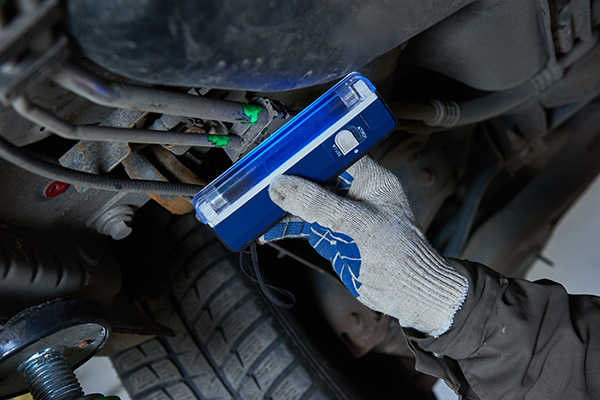
A good A/C leak check is more than adding refrigerant and hoping the air gets cold. The system may need a visual inspection, pressure testing, electronic leak detection, or dye added to help find where refrigerant is escaping. The exact method depends on the vehicle and the rate of the leak.
Regular maintenance can help catch worn belts, weak airflow, dirty cabin filters, and early A/C concerns before peak heat arrives. If the system is already blowing warm, the next step is testing. That is how you find out whether the repair is a leaking condenser, a bad seal, a damaged hose, a compressor issue, or another fault.
Get Car A/C Leak Repair In Williamsburg, IA, With Just Automotive
If your A/C keeps losing refrigerant or the vents are no longer blowing cold, Just Automotive in Williamsburg, IA, can test the system, find the leak, and repair the cause, rather than just recharging it.
Bring it in before a small refrigerant leak turns into compressor strain, moisture contamination, or a hotter drive than you expected.