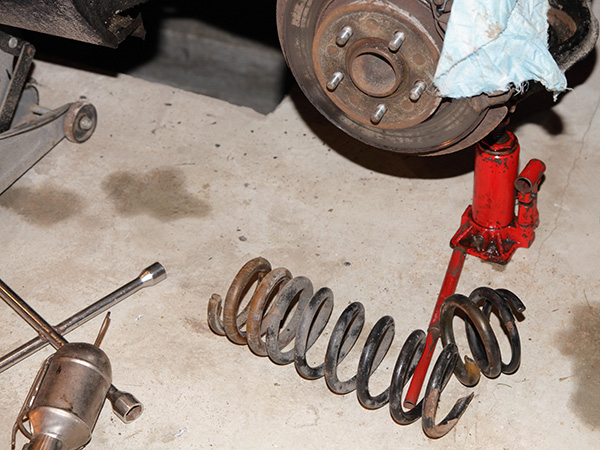
A broken suspension spring can surprise drivers because it does not always give a clear warning first. One day the car sits level, and the next it leans lower on one corner, makes a sharp clunk, or feels rough over bumps. When that happens, it is natural to wonder whether the shock absorbers had anything to do with it.
The short answer is that worn shocks usually do not snap a spring on their own. Springs can break from age, rust, heavy impact, repeated stress, or metal fatigue. Still, bad shocks can make the suspension work harder, and that extra movement can add stress to springs and nearby parts over time.
What Shock Absorbers Actually Do
Shock absorbers control how much the suspension moves after the wheels hit bumps, dips, and rough pavement. The springs carry the vehicle’s weight and absorb road impact. The shocks control the spring movement, so the car does not keep bouncing after every bump.
When shocks are healthy, the vehicle settles quickly and feels controlled. When they wear out, the springs move more than they should. The car can bounce, float, dip during braking, or feel unsettled at highway speed. That extra motion changes how the suspension handles every mile.
How Springs Can Break
Suspension springs are strong, but they are not immune to wear. They deal with the weight of the vehicle, road impact, potholes, curb hits, rust, and constant compression. Over time, the metal can weaken, especially in areas where road salt and moisture attack the spring surface.
A spring can also break after a hard impact. Hitting a deep pothole or curb can suddenly overload the spring. If the spring was already rusty or fatigued, that impact can be enough to finish it off. Sometimes the break happens near the bottom coil, where damage and corrosion are harder to see.
How Worn Shocks Add Stress
Worn shocks allow the springs to bounce and cycle more than they should. That means the spring compresses and rebounds with less control. Over thousands of miles, that extra movement can contribute to fatigue in springs, mounts, bushings, and other suspension parts.
Bad shocks can also let the tire hit bumps harder instead of keeping the wheel controlled. The spring has to absorb more of the impact without enough help from the shock. That does not guarantee a broken spring, but it can create a harsher environment for every part in the suspension.
Warning Signs Of Weak Shocks
Weak shocks tend to leave clues before they completely fail. The vehicle may bounce more after bumps, dip forward during braking, lean more during turns, or feel less stable on rough roads. You might also notice tire cupping, patchy tread wear, or increased road noise.
Fluid leaking down the side of a shock is another sign that it may no longer be doing its job. Clunks and rattles can also appear if mounts or related parts are worn. These symptoms should be checked early because shocks affect more than comfort. They influence tire contact, braking feel, and suspension control.
Signs A Spring May Already Be Damaged
A broken or weak spring can change the way the vehicle sits. One corner may look lower than the others, or the car may lean to one side. You may hear a sharp clunk when turning, backing out of a driveway, or hitting a bump.
A damaged spring can also make the ride feel harsh because the suspension no longer supports the vehicle evenly. In some cases, a broken coil can shift and come into contact with a tire, strut, or other suspension component. That can become unsafe quickly, so the vehicle should be checked before driving further.
Why Suspension Parts Should Be Checked Together
Shocks, struts, springs, mounts, bushings, control arms, and tires all work as a system. Replacing only the part that looks broken can miss the reason the suspension was stressed in the first place. If a spring breaks, the shocks and surrounding parts should be inspected too.
The same is true when shocks are worn. New shocks can improve control, but the rest of the suspension still needs a careful inspection. Regular maintenance helps catch uneven ride height, tire wear, leaks, rusted springs, and loose parts before the vehicle feels unsafe or starts damaging tires.
When To Schedule A Suspension Check
Schedule a suspension check if the vehicle bounces more than before, makes clunking noises, sits unevenly, pulls, wears tires unevenly, or feels unstable during braking and turns. You should also have it checked after hitting a major pothole, curb, or road debris.
Suspension wear can build slowly, so the driver gets used to the change. That is why a professional look matters. A technician can compare ride height, inspect the springs, check shock condition, look for rust or leaks, and test for looseness in related parts.
Get Suspension Inspection In Williamsburg, IA, With Just Automotive
If your car is bouncing, clunking, sitting unevenly, or showing signs of worn shocks or damaged springs, Just Automotive in Williamsburg, IA, can check the suspension and help you understand what needs attention.
To protect your tires, ride control, and safety, contact us to schedule an appointment.